Australian government supports Curtin students to digitise geodatasets in the Solomon Islands
Published: October 29th, 2026 04.22 AM UTC
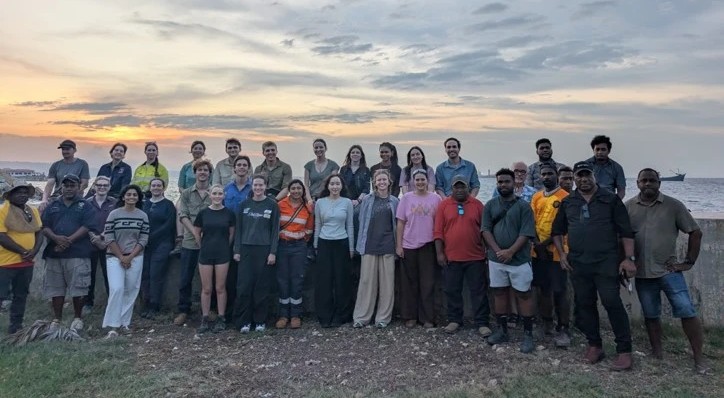
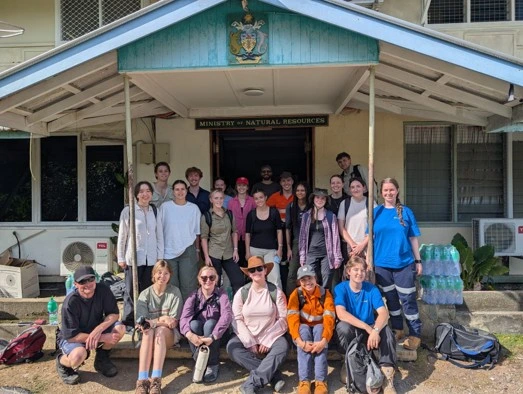
Decades of geological knowledge from the Solomon Islands have been given a new lease on life, thanks to a team of 20 students and five staff from Curtin University who spent four weeks transforming historical geological maps and rock collections into accessible digital datasets.
Funded by the Australian Government's Department of Foreign Affairs and Trade through the New Colombo Plan Mobility Program, the students travelled to Honiara from 14 June to 12 July 2026 to work alongside geologists from the Solomon Islands Ministry of Mines, Energy and Rural Electrification (MMERE).
The project, led by researchers from Curtin University's School of Earth and Planetary Sciences and the Curtin Frontier Institute for Geoscience Solutions (CFIGS), aimed to preserve valuable geological information while strengthening scientific partnerships between Australia and the Solomon Islands.
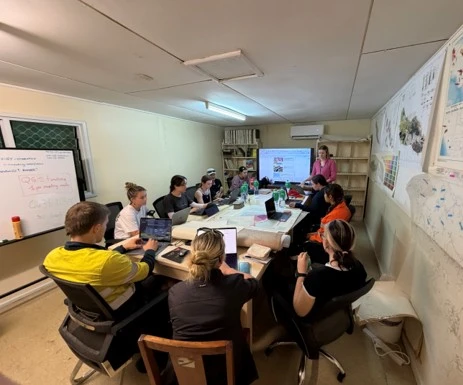
Despite its significant mineral potential and fascinating geological history, much of the Solomon Islands' geological information has remained inaccessible to researchers and mineral explorers. Geological maps dating back to the 1950s were largely stored as paper copies, while thousands of rock samples collected during historical mapping campaigns had been left in deteriorating storage sheds.
Working in five teams, the Curtin students undertook the enormous task of digitising these historical records and rescuing the country's geological rock collection.
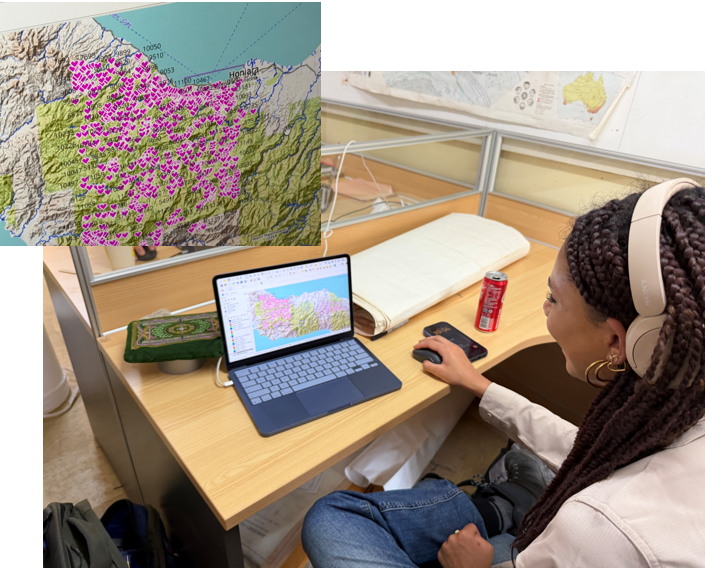
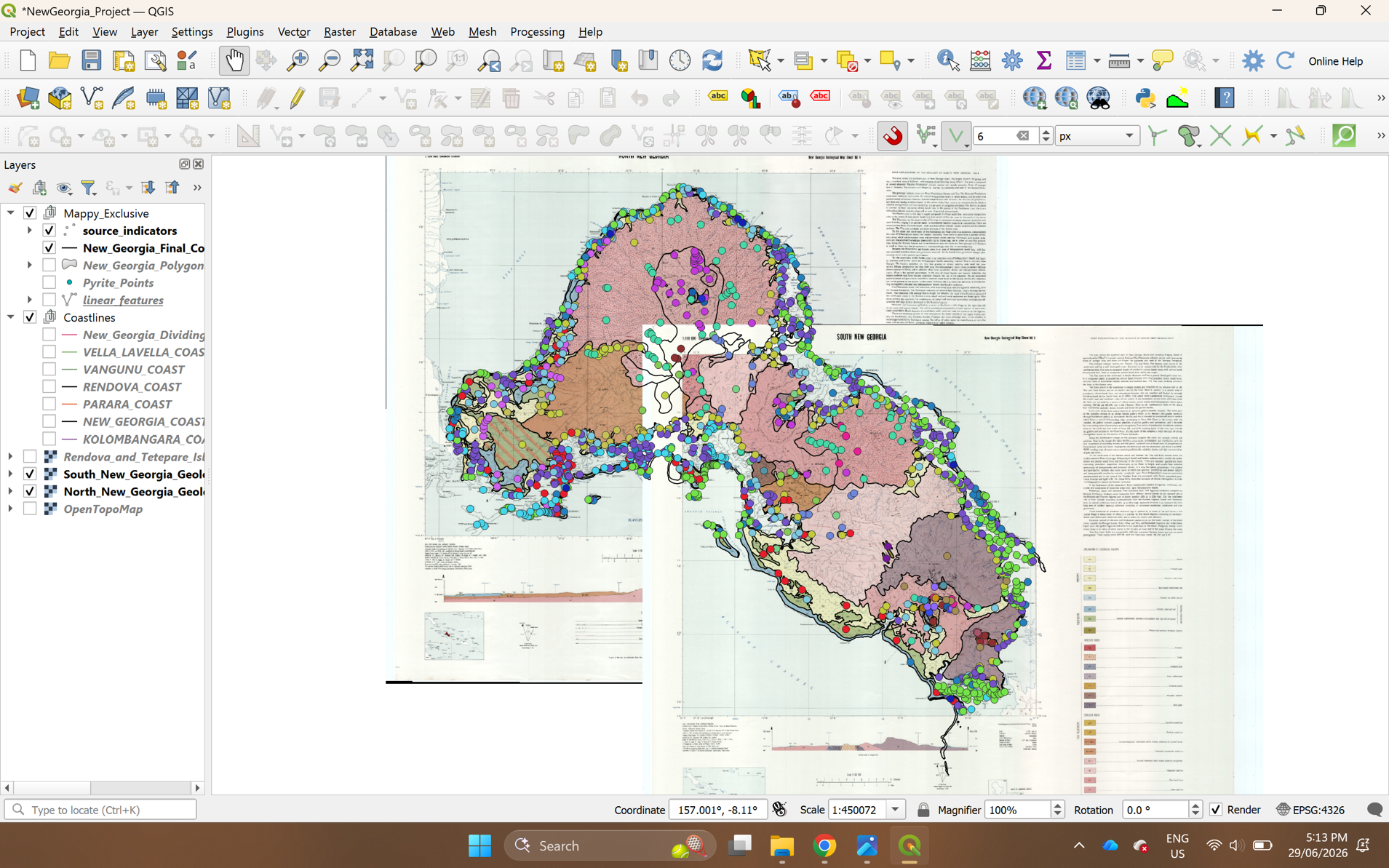
Using geographic information system (GIS) software, the students scanned and georeferenced more than 100 historical maps, converting geological boundaries and structures into digital datasets. The resulting maps cover approximately 98% of the Solomon Islands' land area at scales of 1:50,000 or 1:100,000. They also digitised the locations of more than 13,000 historical rock samples, allowing future researchers to identify precisely where geological specimens were originally collected.
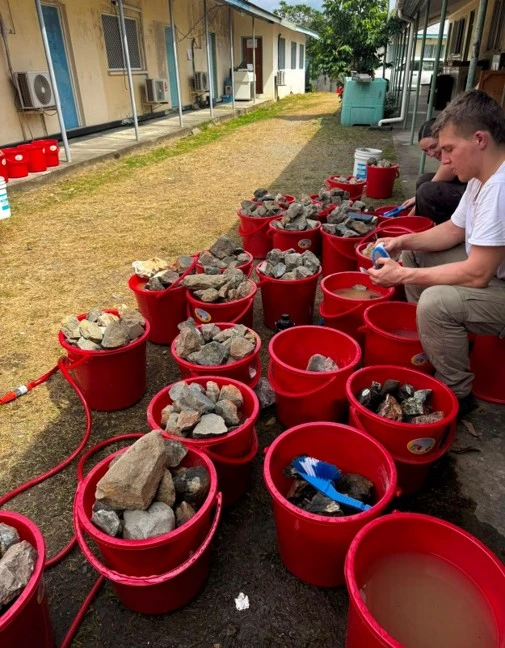
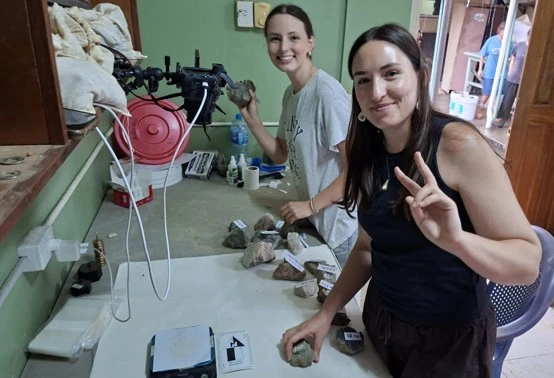
Equally challenging was the task of recovering thousands of rock samples from ageing Geological Survey storage sheds. Students spent hundreds of hours sorting, carrying, cleaning, identifying, photographing and describing rocks collected from islands across the archipelago. More than 7,000 specimens were handled, successfully catalogued and transferred into a new storage facility. Approximately 4,000 of these catalogued samples could be linked to their original geographic locations.
Together, these datasets provide an important new resource for understanding the Solomon Islands' geology, supporting future mineral exploration and enabling scientific investigations without having to repeat decades of geological fieldwork.
Outside their daily work, students experienced local markets, villages, waterfalls and coral reefs, while a visit to the Gold Ridge gold mine on Guadalcanal offered a firsthand look at the country's mining industry.
Towards the end of the program, the students presented their achievements to the Australian High Commission in Honiara, highlighting both the scientific outcomes and the personal experiences gained throughout their stay.
The project was undertaken in collaboration with MMERE and the Revenue Development Foundation, which has been supporting the development of the Solomon Islands' online geoscience infrastructure through World Bank funding. The newly digitised datasets are intended to be incorporated into the Ministry's online repository, helping make geological information more accessible to government, industry and researchers worldwide.
The results are also being prepared for publication in the journal Scientific Data, with the students contributing as co-authors, demonstrating how undergraduate education can deliver meaningful scientific research and internationally valuable datasets.
The collaboration has also opened discussions about future partnerships, including further digitisation of historical geochemical records, geological thin sections and opportunities for geoscience education with Solomon Islands National University.
By combining scientific research, international engagement and hands-on student learning, the New Colombo Plan project has delivered an enduring contribution to the Solomon Islands' geological knowledge while helping develop the next generation of Australian geoscientists.